

Niky Ellison
The Difference Between Interactive and Immersive
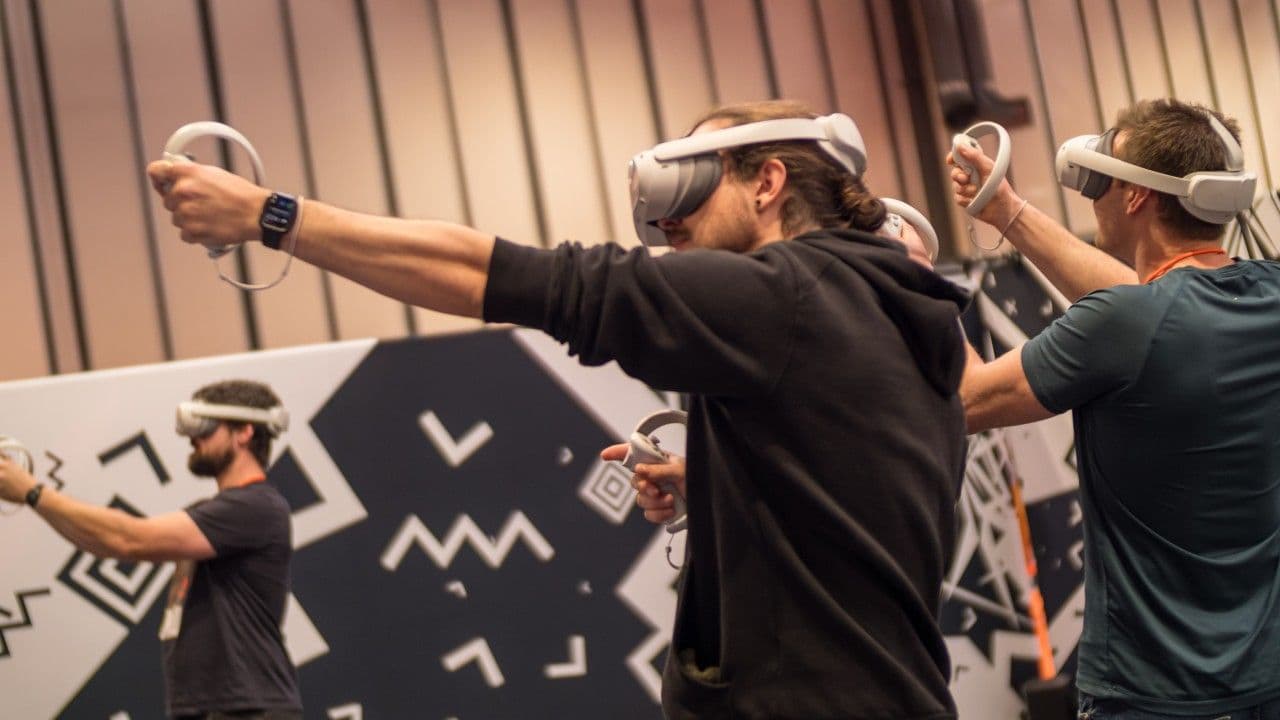
Interaction introduces something different. It gives audiences agency. Their actions, decisions or behaviours have a meaningful effect on what happens next. The experience responds to them.
One of the words we hear most often when discussing experiential projects is "immersive".
It's become a catch-all term for experiences that are memorable, engaging and visually impressive. Whether it's a branded environment, a projection-mapped installation or a large-scale activation, immersive is often the goal.
But immersive and interactive aren't the same thing.
At SHUCK, we spend a lot of our time designing interactive experiences, and it's a distinction that comes up surprisingly often. A project can be incredibly immersive without being interactive at all.
Think of a beautifully designed exhibition space. The environment might be visually stunning, emotionally engaging and completely absorbing. Visitors may spend time exploring it and taking it all in.
They're immersed.
But they aren't necessarily influencing the experience.
Interaction introduces something different. It gives audiences agency. Their actions, decisions or behaviours have a meaningful effect on what happens next. The experience responds to them.
That might sound like a small difference, but it fundamentally changes how people engage.
When somebody participates rather than observes, they become invested in the outcome. They're no longer consuming an experience passively. They're contributing to it.
You can see this play out at events all the time. People naturally gather around experiences where something is happening. A challenge is underway. Someone is trying to beat a score. A crowd reacts to an unexpected outcome. Friends encourage each other to take part.
The audience becomes part of the experience itself.
This is one of the reasons game design has become increasingly relevant within experiential marketing. Games are built around participation. Every mechanic, challenge and feedback loop is designed to encourage people to engage actively rather than passively.
The interesting thing is that this doesn't necessarily require complex technology. Some of the most effective interactive experiences we've worked on have been built around remarkably simple ideas. What matters isn't technical complexity. It's creating a meaningful relationship between action and outcome.
As audiences become increasingly accustomed to interactive forms of media, that relationship is becoming more important. People don't just want to experience something. They want to influence it.
That's why I think the most successful experiential projects combine both approaches.
Immersion gives people a reason to enter an experience.
Interaction gives them a reason to stay.